Category: Games

Cliffski’s Podcast

This is the best podcast I’ve heard in a while. It’s basically Cliff Harris talking about his work in the game development business and how he went indie.

As I listened to the podcast I took some notes, which I am posting below. These are kind of stream-of-consciousness and may not make much sense unless you listen to the podcast (which you should!) I’m basically just posting them because…well, I wrote them and I don’t want to lose them.


Yes, we got the ZX-81 here in the States; it was sold as the Timex Sinclair 1000.

Yes, we had Astrosmash here in the States! It was created here, for crying out loud, for the Intellivision!

Interesting that Cliffski calls Asteroids “the default game” that most people write first…I remember reading an article from Andre Lamothe where he says that whenever he has to learn a new game development API the first thing he does is write Asteroids in it.

I firmly believe that all the best game developers are completely self-taught. I believe this because it means that one day, I might be one of the best game developers!

Evil Genius came so, so close. It was almost a great game, it just lacked…something.

“Take the mickey out”? Good grief, you Brits and your language constructions…

Ah, the parallels continue…I was terrified on my first day at Multimedia Games (my first real programming job). Heck, that lasted for the first few months. If it hadn’t been for my friend Brendan Segraves I would never have made it. I remember when I sent my first game to test, Brendan said “Congratulations! You’re a game programmer now.” That was really nice of him and I’ll never forget it.

And this is why finishing stuff looks so damn good on the resume. You can have a PhD in applied artificial intelligence, but that does not mean you know how to make a complete game. The only thing that proves that you know how to make a complete game is having made a complete game yourself. Cliffksi was probably a more competent overall game developer than any of those guys with their fancy college learnin’, and here he actually felt unworthy to work with them! (See “the best game developers are self-taught”, above.)

“I learned what the hell source control was and I learned what the hell a debugger was” == me collapsed in paroxysms of laughter. I didn’t learn what a debugger was until my first job either.

At Gizmondo, we played poker, darts, foosball, Heroclix and Magic as well as computer games. Cliffski’s right…the environment and attitude at a proper game company is just awesome. It’s almost like belonging to a club instead of working at a company.

Yep, failure hurts. But it makes you savvy, and it’s hard to become savvy without failure, so the best thing is to simply consider it part of the process.

Well, Star Revolution looks like it’s going to turn into a fantasy combat game, so I know all about games not turning out the way you plan at the start 🙂

The Dexterity forums! I miss them; yes, IndieGamer forums are the proper successor, but the tone seems different there…

“The whole of game development is full of code hackers who do everything their way” – true. This is a natural side effect of “the best game developers are self-taught”, and Cliffski’s right – you need to read Code Complete and Effective C++ and take what they say to heart, even though it will probably be completely different from how you taught yourself to program.

Cliffski’s dancing around what he really wants to say about Lionhead…it’s unfortunate to have a story to tell and not be able to tell it.

“Terribly badly paid”? What fool wouldn’t pay his game developers properly?

Ah. I guess Peter likes to have lots of low-paid, low-skill developers instead of a small team of highly-paid, highly-skilled experts. That’s…well, completely wrong.

Wow, the parallels between Lionhead and Origin are scary…both companies had initial success, grew too fast, got overextended and then had to be bought out (Origin by EA, Lionhead by Microsoft). All that is left to the Lionhead story is the inevitable dissolution of the company.

Recruited by Maxis. Wow. And it turns out they picked him because of one of his very early games, Starlines…which has been my experience as well. You honestly never know which thing you’ve done is going to get your next job 🙂

He’s definitely got his wheel spun up, which is fantastic. He’s making the games he wants to make, he’s already got companies courting him, so if he starts having trouble making ends meet as an indie he’ll have no trouble finding another industry job…perhaps with a company that isn’t going to fold next year.

“You have to be shameless and creative about promoting your game.” Absolutely true, and it’s why I’ll probably never be humongous because…well, I just don’t feel that my games are worthy of such self-promotion 🙂 This is something Dan “Gibbage” Marshall also obviously understands.

Ah, Guildford…birthplace of Bullfrog. God, I miss Bullfrog. We were supposed to get a third Dungeon Keeper. And a third Syndicate.

Yep, design is hard when you don’t have an existing design to copy. That’s why there are so few truly new game designs.

1. You must learn proper software development and stop hacking everything.
2. You must become a good self-promoter. You must be willing to spend as much time on supporting and marketing your current games as you do making new stuff.

Well, starting a company is a HELL of a lot easier in the US than the UK…

Dissolution of…Me, I Guess

Sorry about the lack of posts. We’re crunching at Aspyr as we move towards our first playable.

And I’m back on caffeine. Which means my diet is kaput. My energy level was just too low without caffeine to survive a crunch. And that low energy level is also why I haven’t been posting, and why I haven’t touched Star Revolution since I posted the combat demo.

Star Revolution is supposed to be done by the end of July. That simply is no longer possible, if it ever was in the first place. Star Revolution was a mistake; it’s just too big for me to do by myself. I am abandoning it (temporarily; I do want to make this game eventually).

Which means I need a new project. Something I can do on my own while surrounded by screaming children, which means something closer to the original Inaria in scope.

Any suggestions?


Gibbage and Angst

Gibbage is a potentially-great little 2D platformer/shooter by Dan Marshall. Gibbage is simple and fun to play (except that the double-jump is too hard to do, in my opinion, and…I can’t seem to beat the computer).

But as I read through Dan’s blog about the development of Gibbage, I couldn’t help but notice his attitude throughout the project. Yes, there were lots of coding books hurled at poor, defenseless walls as he learned, but for the most part his posts are things like, “I’ve got a little guy! Whee!”, “I can run him around! Awesome!”, “Now there are two of them, yipee!”, “Now they can shoot each other! Brilliant!”

Basically…well, he seemed to have more fun developing Gibbage than I did writing Inaria…and a lot more than I’m having writing Star Revolution. Star Revolution in particular is turning into a real slog. I’ve got procedural textures, procedural planets, procedural cities on the planets, aliens, ground combat, space combat, trading, mining, talking and questing in this game. It is possible that I, flush with the moderate success of Inaria, bit off more than I can chew.

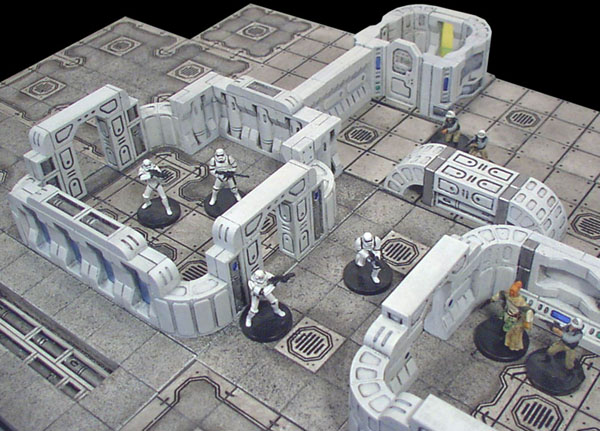
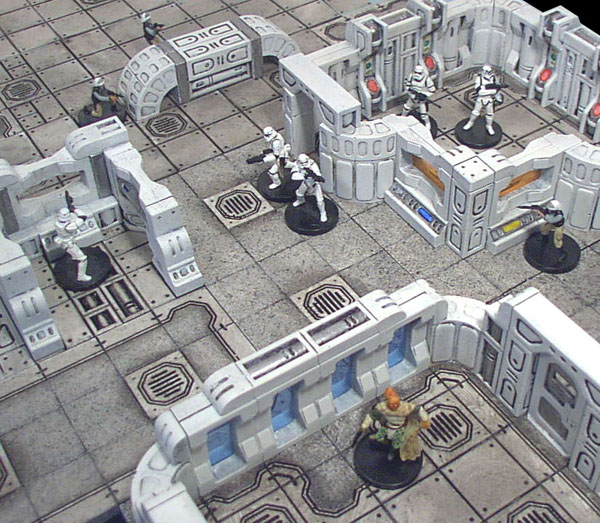
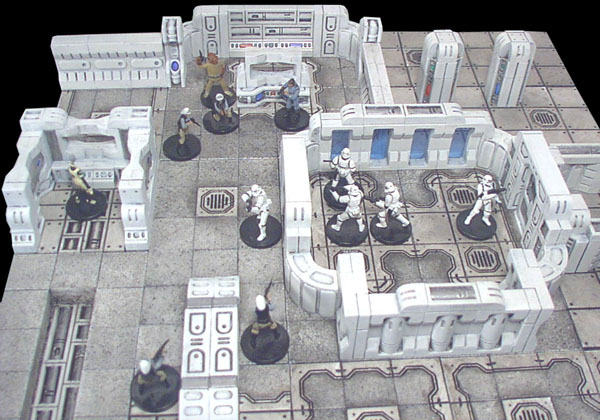
Now, I can see flashes of fun in the future for Star Revolution. In particular, when a friend at work pointed me at this site and I saw these pics of the starship interior molds they sell, I thought, “Wow, that’s exactly how I want SR to look!” And I can foresee putting that together inside the computer as being really fun.

But the amount of infrastructure I have to put together before I get there is just huge, and trying to get it all together is just grinding me down.

Plus I just got a really good book on DirectX and now I’m thinking about moving the whole project off of SDL and OpenGL and onto DirectX and Direct3D…


Dissolution of Warcraft

So, we cancelled our World of Warcraft accounts over the weekend. All three of them. Two of them were collector’s edition accounts.

WoW just falls to bits at 60. I know that’s got to sound weird since they have over five million subscribers at this point, but it’s true. My wife went back to Dark Age of Camelot briefly (she got into that waiting for WoW to come out) and noticed that when she does her artifact raids in DAoC, she’s guaranteed to get the item she needs if she completes the raid…unlike WoW’s “there’s a .03 percent chance for the item to drop and then you have to roll against everyone else in the raid to get it” bullsh- er, crap.

Now, my wife is a hardcore MMORPG player. She started with Ultima Online and progressed to Everquest, Star Wars Galaxies, Dark Age of Camelot and World of Warcraft, and she’s tried many, many more. And since she’s staying home with our young children right now, she’s got a whole lot of time to throw at these games.

And even she eventually got sick of WoW’s “Better luck next time, try again” gameplay at 60.

Now, sigh, yes, we will probably go back at least temporarily when Burning Crusade comes out, but it’s going to take a lot to bring me back into WoW permanently. Basically, it’s going to require 60 casual content, which WoW doesn’t have at all. Once you get to 60, you raid or you farm faction. That’s all you have to do. No quests – you’ve done them all (except for raid quests that get you the keys to new dungeons). No more getting better armor and weapons from world drops – now the only way you can improve your armor and weapons is by raiding. Basically there’s no reason to log in unless you’ve got a nice three-hour chunk of time and you’re ready to raid. And you’d better be willing to do it every night of the week or you still won’t get anything.

Yeah, I’m bitter. And yes, I keep harping on this. I can’t help it – the game was so damn good until 60. It just hurt when I realized that gosh, there’s nothing more for me to do in WoW now.


Harmonix Convergence

There is a rumor floating around that Guitar Hero II will feature a track from the Megaman 2 soundtrack as played by the Minibosses.

That much geek coolness in one place could destroy the universe if misused.


Lazy Linkage

Yes, it’s a cheap way to get a post up, but I found some interesting stuff I’d like to share:

Oblivion just got its first patch (ironically, a day after I beat it). Lots of players won’t be installing the patch, because if they do they won’t be able to do stuff like this.

Real Tekken. Little else to say.

Here’s a site with a bunch of connected stories about the design of both the hardware and software of the original Macintosh. It’s a great way to waste an afternoon. Start with “I’ll Be Your Best Friend” and just read them chronologically.

And I actually worked on Star Revolution last night. It’s slow, but it’s coming…maybe by this weekend, we’ll see.


Dissolution of Oblivion

If you’re a regular to this site, you may be wondering, “Where the hell is my freakin’ combat prototype? I thought you said you were going to finish it last week!”

Um…yeah. About that…see, IplayedOblivionallweekendinstead.

BUT! I have now completed the main plotline and a good chunk of the side quests, so once I write this post about how awesome Oblivion is, it’ll be out of my system and I can get back to work. Really!

So, how awesome is Oblivion?

Truly awesome. If it’s not the best game I’ve ever played, it’s damn close and definitely the best I’ve played in years. Its only flaw is its levelling system, which at later levels just requires too much work…it’s almost as if the game punishes you for both powerlevelling and getting to level 20. I ended up fixing that problem with judicious use of the player.setav console command. Once I did that, Oblivion was pure, sweet RPG goodness flowing directly into my veins.

Okay, I have to stop writing stuff like that or I’ll just fire it up again and waste another evening. I still have over 20 unfinished quests…no, no, I’ll be strong.

So what was wrong with Oblivion? (Other than the levelling, which we’ve already covered?) Why, Oblivion, of course. The planes of Oblivion start off looking and playing really cool, but it quickly became clear that because those planes are meant to be closed, nothing can happen in them. No plot points or scripted sequences can happen in a plane of Oblivion because players might miss them. Thus they very quickly began to feel like busywork and I eventually started avoiding combat and just running straight to the Sigil Stone as fast as I could to get them over with. You don’t even get any decent loot in them…Daedric weapons can be pretty powerful, but they are also really, really heavy. Better to sell them to recharge my Mace of Shocking Woe, which is a glass mace I enchanted to do 35 points of shock damage on hit. That thing kills everything dead, I love it.

The other thing I wanted to mention was the ending. The ending has a serious plot twist in it that changes the Elder Scrolls universe forever (and no, I’m not going to tell what it is, no matter how you beg). I really, really liked the ending but I’ve heard tell that lots of other Elder Scrolls fans are pretty outraged. All I can say is…guys, grow up.

Overall, it’s the best $50 I’ve spent in a while, and I know I’ll be going back to it…after Star Revolution is finished.


The Final Fantasy

We’ve got two Final Fantasy games coming out later this year: Final Fantasy III and Final Fantasy XII.

Final Fantasy III is a remake of of the original Final Fantasy III for the Famicom. It was never released in the United States…probably for good reason. The first three Final Fantasy games all had the same plot: the Crystal chooses four young people to be heroes who then sally forth to defeat the Big Bad. The games differed in the name of the Big Bad, the world the heroes travelled through and the system by which the heroes gained in power, but plotwise the games were exactly the same…you even fought a lot of the same monsters in all three games.

(Historical aside: this was what made Final Fantasy IV such a revelation to gamers. With IV, all of a sudden you had heroes who already had names and personalities and actually said things. You didn’t start with your entire party intact; instead you recruited members into your party as the game progressed. And the game had a storyline beyond “kill the big bad”. FF IV set the tone for the Super Nintendo iterations of the series, which of course culminated in the superb FF VI.)

The new FF III is a complete remake being released on the Nintendo DS. It’ll have an expanded storyline and prenamed characters who speak, so it’ll be much more like a modern Final Fantasy game.

And I’ll be honest: I’m looking forward to the release of Final Fantasy III on the DS more than the release of Final Fantasy XII on the PS2. Why?

Well, because Final Fantasy XII is apparently some sort of action-adventure game set in a hybrid fantasy/sci-fi world with the name “Final Fantasy” on it. Square honestly doesn’t know what to do with this series so they are reinventing it with every new game with disastrous results.

Final Fantasy III, on the other hand, will be a true Final Fantasy game. And it will be the last one ever made.


Chunky Pixels, Part II

First off, thanks for all the responses to my previous post on this subject! I’ve been doing a lot of thinking on the various ideas you guys gave me.

Dave and Wynne, the vector idea would be a really good one if the game was space-only, but since I want the player to be able to land on and walk around on planets, that kind of breaks down. So I’m looking for something else. Thanks for the idea anyway.

Now I am going to reveal something. I have already decided that after I finish Star Revolution, my next project is going to be Inaria II. It’s going to have a real 3D engine, using technologies I am developing for Star Revolution. And I had already decided that I wanted a specific look for Inaria II, a look I first saw in Exult.

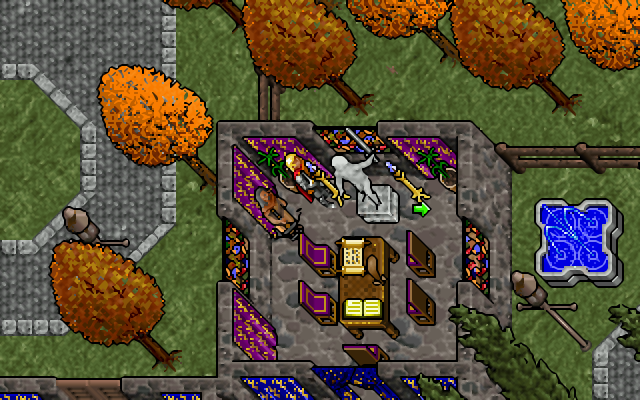
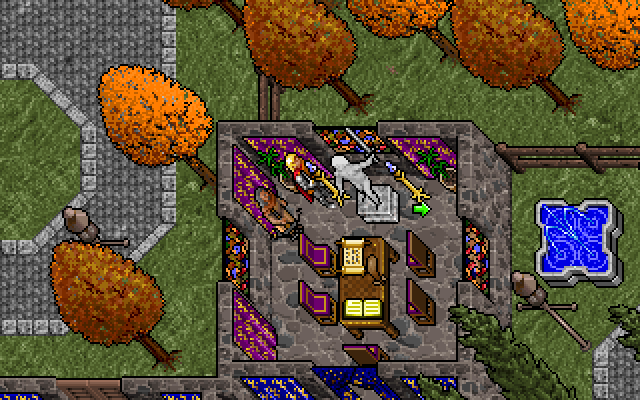
Two pictures in this case will be worth a thousand words. Here’s Ultima VII at double-res (640×400). (Click each image to view it at full size.)

Ah, Ultima VII.  The last truly great Ultima.

Now here’s the same scene (still at 640×400) with the HQ2X image filter applied to it:

Mmmmm.

When I first saw a version of this filter (called Scale2X) in Exult I was very attracted to it. It doesn’t make things look blurry like most filters do. The tone and composition of the scene are still very apparent, but the blockiness has been smoothed over. I especially liked what the filters did to the trees – they almost look like watercolors now.

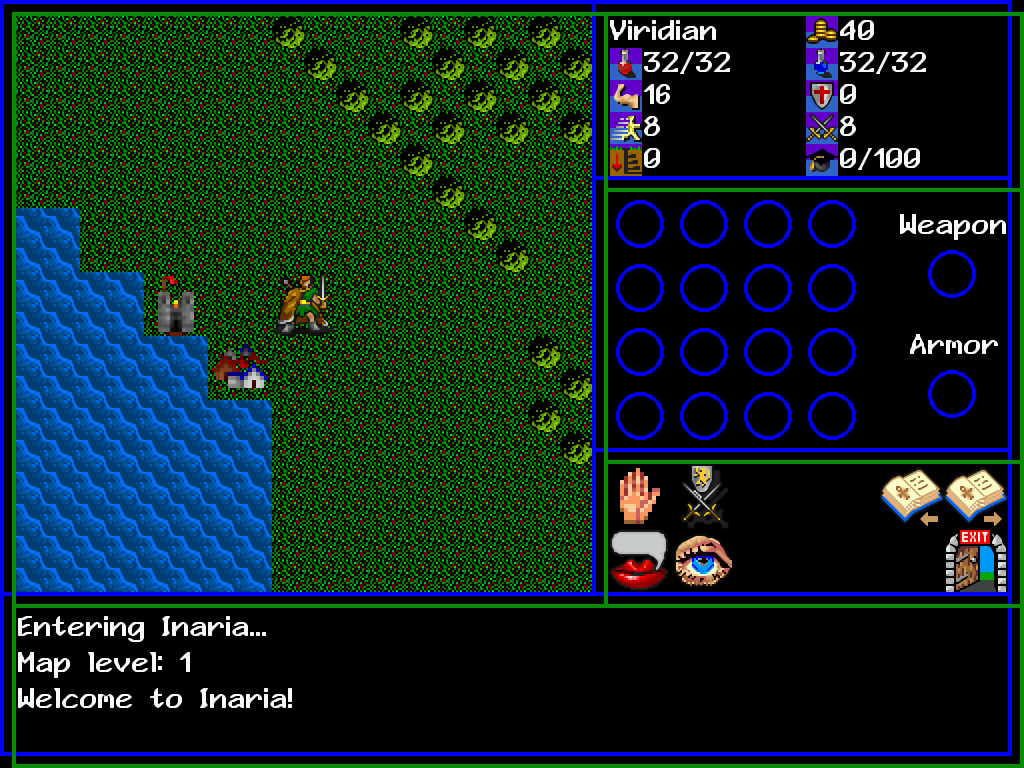
And just for the record, here’s how Inaria I would have looked with the HQ2X filter applied to it:

Woohoo!

I had not intended to use this look for Star Revolution, and I hadn’t intended to get the look by using a filter but by composing my textures to provide the look…but the more I think about it, the more I feel that Star Revolution would benefit from the look. Hopefully I’ll get this darn combat prototype finished and can mock up some screenshots and you guys can see it for yourselves. I think it’ll give me the feeling I’m going for: high-resolution, but the world/universe almost looks like it’s made out of Lego blocks…I think that would be perfect.

I don’t think I’ve actually ever seen the HQ2X filter applied to a 3D scene before. This will be very interesting.


Chunky Pixels

While I got a significant amount of work done on the combat prototype for Star Revolution over the weekend, it still isn’t quite ready. So in the meantime, I’m polling the audience!

When I wrote Inaria, I used a 512×384 video mode. This is kind of low-res, and I did it on purpose. I wanted the pixels to be a bit…chunky. I wanted you, the player, to be able to see individual pixels. I did this because I wanted to evoke a sense of the older RPGs that I was honoring.

And last night I was reading Masters of Doom again during compiles when I came across this passage:

Richard Garriott, a.k.a. Lord British, the son of an astronaut in Texas, spoke in Middle English and created the massively successful graphical role-playing series of Ultima games. As in Dungeons and Dragons, players chose to be wizards or elves, fighting dragons and building characters. The graphics were crude, with landscapes represented by blocky colored squares: a green block, ostensibly a tree; a brown one, a mountain. Players never saw their smudgy stick figure characters attacking monsters, they would just walk up to a dragon blip and wait for a text explanation of the results. But gamers overlooked the crudeness for what the games implied: a novelistic and participatory experience, a world.

Inaria is a pointer to a pointer. Its blocky graphics are trying to evoke a previous style of game which, in turn, tried to evoke a world rather than accurately represent one.

Is that even possible nowadays? Quake started us down the road from evocation to representation and we’ve been barrelling down it for years, but will we ever arrive? And if we do, will it be possible for small teams to make the trip, or will it necessitate 50-60 people for three and a half years? That’s what Oblivion required…

And here’s the question that is pertinent to me…can we ever go back? Does this sort of evocation still work? And will it work even on newer players who have never played a game in 320×200? Who don’t know what VGA is?

Basically, I’m asking this: Do you think Star Revolution in a lower resolution will evoke older space opera RPGs, or will it just look really stupid?